For decades, we’ve heard the same message about what’s best for the heart:
People in Crete ate olive oil and had low rates of heart disease.
Finland replaced butter with rapeseed oil, and heart attacks declined.
Therefore, olive oil must be the answer.
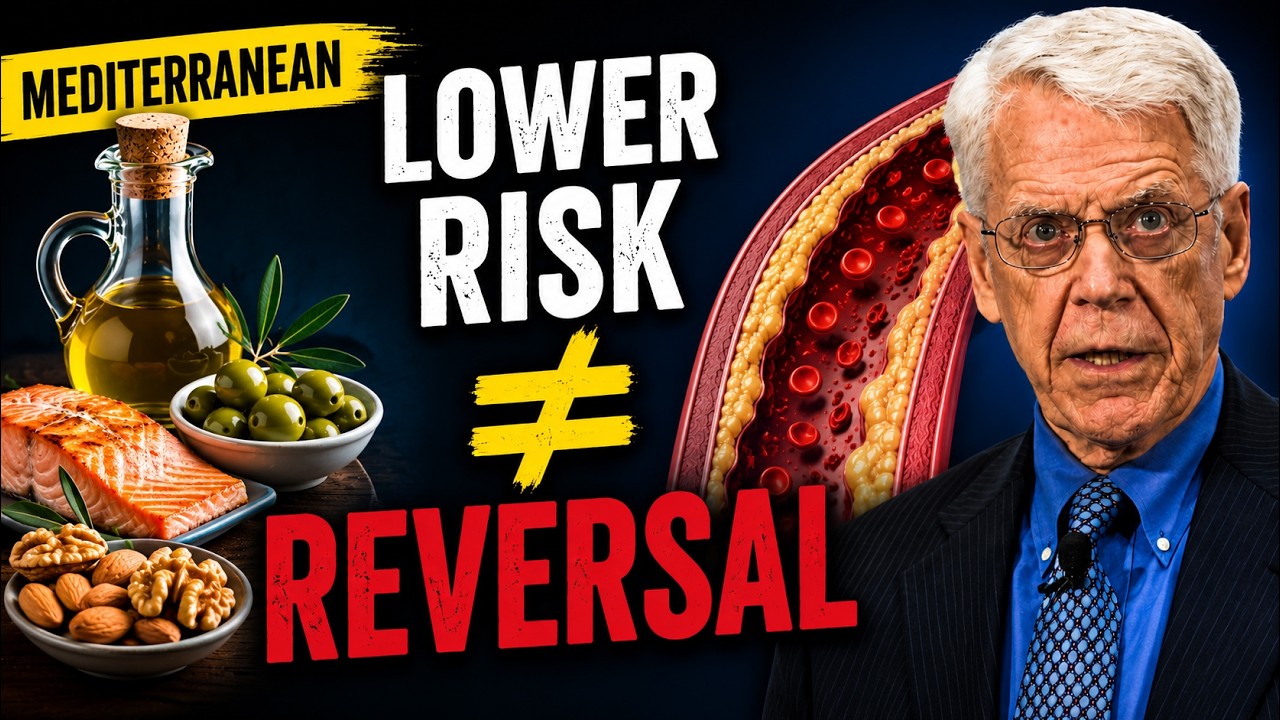
But those famous studies never asked the question most people think they answered. They asked whether a population could lower its risk. They never asked what works best once someone already has heart disease.
That’s a very different question.
In today’s video, I dig into the distinction between risk reduction and disease reversal — the work of physicians like Esselstyn, Ornish, McDougall, Pritikin, and Kempner, and why comparing an oil-free, whole-food, plant-based diet to the Standard American Diet misses the point.
If you’ve ever wondered whether olive oil can do what these reversal programs achieved, this one’s for you.
FULL VIDEO OF PETER LEWIS FROM 2006:
https://www.youtube.com/watch?v=HLNA12RKFdE
CHAPTER TIMESTAMPS:
00:00 Peter Lewis’s Heart Disease Story
00:48 The Diet That Changed Everything
01:38 Risk Reduction vs. Reversal
02:10 The Mediterranean Diet Question
03:17 The North Karelia Project
03:50 What Made Crete Different?
04:13 Five Doctors Who Focused on Reversal
04:42 What Reversal Diets Have in Common
05:15 Esselstyn’s Results
05:58 What I’m Not Saying About Olive Oil
06:48 The Limits of the Evidence
08:08 What Population Studies Miss
08:49 The Problem With Substitution Studies
09:39 Following the Money
10:17 Which Diet Works Best?
10:53 Prevention Is Not Reversal
11:27 How Much Risk Will You Accept?
Subscribe on Substack (to receive email when we upload):
https://vegsource.substack.com/
O U R W E B S I T E
https://www.vegsource.com