
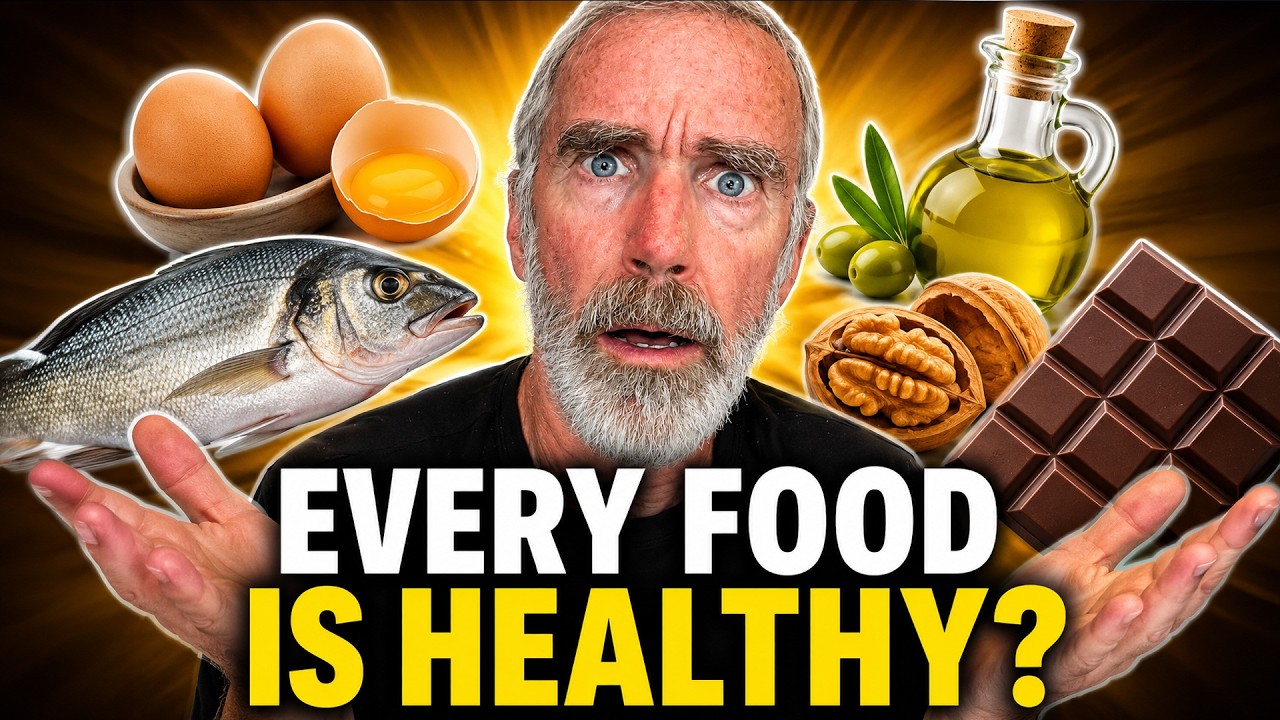
Every few months, a new headline:
Eggs prevent Alzheimer’s.
Fish helps you live longer.
Olive oil reduces mortality.
Chocolate improves your health.
Coffee protects against disease.
And every time, someone announces that science has spoken.
But how do these studies actually work?
In my new video, I look at how that research is really done — and why scientists like Stanford’s John Ioannidis urge real caution before we believe any of it.
It’s not that nutrition research is worthless. It’s that the headline-making findings almost always come from observational studies built on self-reported food questionnaires — people guessing how often they ate eggs last year — and then hunting for associations decades down the road.
The result? Almost every food eventually gets its turn as the latest “superfood.”
So instead of asking whether eggs prevent Alzheimer’s or walnuts extend your life, here’s the better question — the one almost no headline asks:
What overall dietary pattern actually produces the best long-term health?
That’s what the video is about.
Subscribe on Substack (to receive email when we upload):
https://vegsource.substack.com/
O U R W E B S I T E
https://www.vegsource.com